Saving Africa’s endangered wildlife species: mountain gorillas
The role of rangers in mountain gorilla conservation.
Saving Africa’s endangered wildlife species, Gorilla conservation is a holistic effort aimed at preserving the gorillas and natural habitats free from illegal hunting, habitat destruction and infectious diseases.
Mountain gorilla conservation was spear-headed by Dian Fossey, a great primatologist who dedicated all her efforts to protecting gorillas and advocating for conservation of their home. She established the Karisoke research Centre in 1967 as a base for her research, she advocated for, raised awareness about the need for gorilla conservation, mobilized support for their protection and wrote books like “Gorillas in the mist’. Her tireless efforts arose attention to the world and mountain gorillas were marked as endangered species. Dian Fossey’s legacy still stands to date as the main foundation of the conservation efforts that have led mountain gorillas to outstand as one of the major tourism attractions in Uganda, Rwanda and the Democratic republic of Congo.

Gorilla conservation is currently done through anti-poaching patrols, conducting research, habitat restoration, promoting sustainable tourism, as well as working with the communities to make sure the gorillas survive.
Beyond funding and laws, there is a less recognised group of people behind this gorilla conservation cause. In the mountain gorilla gazetted homes including Bwindi Impenetrable National Park, Volcanoes national park, Mgahinga Gorilla Park and Virunga National Park, rangers play an important role of daily monitoring of the gorillas and all the daily routines in the park.
Who are gorilla rangers?
Rangers are wildlife conservationists who work directly with the public to protect biodiversity, natural and cultural treasures, rights and welfare of people now and in the future. Rangers are entitled to protecting forests, national park and other wildlife gazette areas. For the case of mountain gorillas. Rangers are always inside or near Bwindi, Volcanoes, Mgahinga and Virunga gorilla National parks.
These rangers are always former soldiers, youth, teachers and some are former poachers and from the surrounding villages. Qualifications for being a ranger are attained after exhausting training from the responsible wildlife bodies in the countries including Uganda Wildlife Authority in Uganda and Rwanda Development Board in Rwanda. Some rangers work for the government, some are local community members while others are volunteers, all aiming at conservation.
What are the roles /duties of gorilla rangers?
Morning preparations and assignments
Before sunrise, rangers gather at their respective control posts at the edges of the park for briefing from their seniors and later allocation to particular gorilla locations, weather conditions and poaching alerts in the forest park. With their GPS trackers, radios, notebooks and machetes, rangers leave the control post in teams. Using the last known coordinates, they start their duties into the forest.
Monitoring the gorilla families depending on the nest findings.
Trackers begin by searching for and identifying the nests where the gorillas spent the previous night. they are marked by their waste products like urine and dung, food remainders and pressed plants. At times they follow their screams to find the exact location. After determining the location, they use their radios to convey message to the guides at the park center how to trek with the visitors to meet the gorilla family.
Such monitoring helps them to detailed records about the gorillas, understand their behavior and identify any signs of sickness or distress.

Education and Interpretation
Park rangers deliver lessons and guidelines to visitors for a deeper understanding on how to behave during the tracking excursion. this helps visitors to know the park’s natural and cultural attributes of the forest. This entails conducting guided tours, conducting presentations, and publishing educational content.
Visitor Assistance
The Rangers provide details of gorilla tracking activity, provide trail maps, safety protocols, and camping rules. Such guidelines guarantee secure wildlife encounters.
Preventing conflicts between humans and the wildlife (the gorillas)
Since gorillas are wild creatures, at times they are seen searching for food in people’s gardens and plantations which leads to crop damages. To control conflicts that may arise between people and the gorillas, rangers often step in to lead the gorillas back into the forest. they collaborate with the community measures to reduce conflict through building electric fences to discourage animals from interfering with human premises and vice versa.
Community engagement and awareness.
Rangers help to develop close links with the nearby communities. They develop some conservation projects and even recruit some community members as local guides while others can workers as porters to lift trekkers’ back packs. This helps to ignite public understanding of the value of preserving mountain gorillas, conserving their habitat and how their existence contributes to their well-being. this helps to create a sense of collective responsibility for conserving natural heritage and encourage cooperation.
Conduct anti- poaching operations.
Gorilla protection largely depends on the use of advanced technology. Gorilla rangers use materials like surveillance cameras that are placed in strategic locations but monitored online from one server center. They have two- way radios for quick communication, and drones for aerial surveillance in the difficult to reach areas. The use of these methods and machines helps to raise detection rates throughout the forested zones and improve ranger safety.
Conduct forest boundary patrols
Gorilla rangers do regular monitoring of the forested zones and their borders. This helps to stop unlawful encroachment by people who want to carry out agriculture, stop charcoal burning and illegal logging and resolve conflicts between humans and wildlife. Such patrols also help to provide security to the people close to the forest.
Through these patrols, they conduct lawful arrests with the help of soldiers and policemen. In so doing, they protect against crime rate and act as a shield between the gorillas and their aggressors.
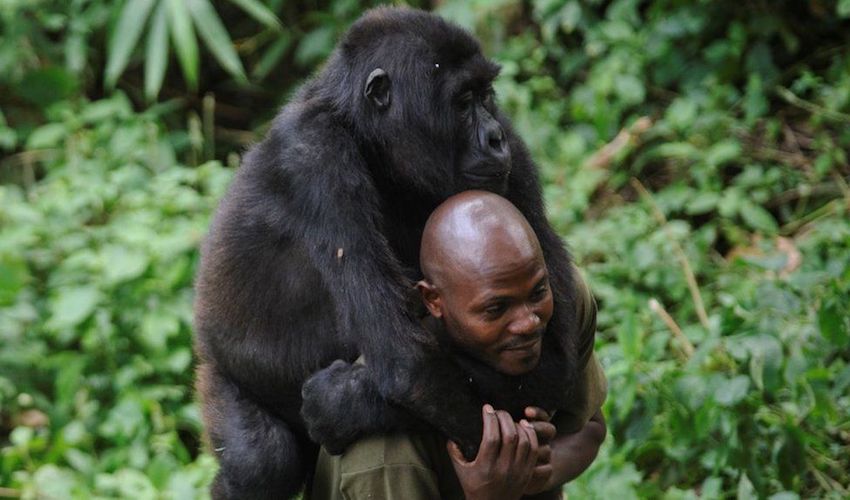
Challenges /difficulties faced by gorilla rangers
gorilla rangers are extra ordinary personnel’s who sacrifice their lives to work in the most risky environment to protect the ecosystem. Though those people work tirelessly, their efforts are less recognized. As they execute their duties, they go through the following challenges
Physical requirements
Every day, ranger traverse through varying altitudinal levels as they car you their monitoring activity. They move through thick vegetation, cross rivers, walk in muddy and slippery surfaces and at times carrying heavy luggage and equipment. they risk lives to snake bites, insect stings, falls, and slips during wet seasons.
Security Threats
Rangers are often confronted by groups of armed poachers. This puts their lives at a high risk. for instance, in 2010, rangers were killed in Virunga national Park. For the case of Uganda and Rwanda, there are less threats due the prevailing political stabilities and in case of any occasional conflict, rangers easily communicate with higher officials for immediate assistance.
Harsh weather conditions
The gorilla parks are found in dense and misty tropical rain forest when weather changes are unpredictable. However, whether its raining, or excessive sunshine, with limited food, shelter or time to rest, rangers bare the situation and continue carrying out the wildlife protection duties.
Stressful memories
Rangers create strong relationships with gorilla groups during the habituation process. They identify certain members and watch them for years, but severe mental grief comes in when a gorilla is being hurt, abandoned, or killed. Such repeated critical incidents cause stress to the rangers and when reported, they always ignored by the responsible authorities.
Unfavorable working conditions
Some rangers are not fully supported to do their activities. Operating gear are not enough at times, uniforms are reused year after year without new ones, boots, cameras and radios are not enough, some are under paid and at times their salaries are delayed or not even paid for some months.
Though these people undergo difficult situations, they remain humble and carry out their responsibility to prevent gorillas from extinction.
Why?
- -They are highly trained and have passion for their job.
- -Many of them consider protecting the forest as part of their lives as most of their families have lived in those areas for ages.
- -They feel that protecting gorillas protects both the world’s biodiversity and their own personal safety.
- – Their dedicated service turns conservation from a concept into a real effort that deserves international acknowledgment and support.
How can the public support rangers and the conservation process.
There are different ways through which the public can support the rangers and conservation programs. It can be direct or indirect in the following ways.
Participate in conservation tourism; A portion of every gorilla permit charge goes to payment for ranger operations and some relatives to the rangers work as porters at the park.
Support gorilla conservation programs directly. A donation to the Ellen De generes gorilla fund is a partial welfare for the gorilla rangers. Direct donations special ranger funds like the Virunga ‘s Fallen Ranger’s Fund
Advocate for conservation policies like reduce deforestation, stop poaching and avoid encroaching on forested areas.
Follow the tracking guidelines like leaving enough distance between you and the gorillas, wear masks, avoid dumping in the park, no flash photography, etc.. this will help to reduce stress and disease transmission.
The government and other responsible bodies should provide the necessary gear to the rangers, including, uniforms, protective gear, cameras, radios and drones where necessary.
When you find online documented work by rangers, follow, support, and share it with others for improved advocacy about gorilla protection.