How to plan a comfortable gorilla trekking experience for the elderly and disabled.
How to plan a comfortable gorilla trekking experience for the elderly and disabled, Just like any other kind of wildlife adventure, gorilla trekking can be tailored to accommodate senior tourists. What makes a difference is that the elderly or disabled are allocated to families in proximity to the park centre. This is because they are too old or have serious body disabilities thus unable to walk long distances to search for the endangered giant gentle apes. As you prepare tracking safari for the elderly, it’s good to consider the use of a sedan chair or stretcher and a personal porter.
Walking with the mountain gorillas is one of the unforgettable experiences that one should not miss to join in a lifetime. Gorillas are endangered primates that mostly dwell in the African wilderness that’s why if you wish to participate in gorilla tracking, you have to Africa. Unlike the low land gorillas that can live in captivity in zoos, mountain gorillas can only be found in their natural habitat and humans can get closer to them through the gorilla tracking or habituation experiences.
Only three African countries—Uganda, Rwanda, and the Democratic Republic of the Congo—are home to mountain gorillas. Uganda is highly gifted with over half of the world’s remaining mountain gorillas surviving in Bwindi Impenetrable National Park. More mountain gorillas reside in Mgahinga National Park also in Uganda. Volcanoes National Park in Rwanda is also home to mountain gorillas and Virunga National park houses mountain gorillas in D R Congo.
Gorilla tracking though considered costly, it is the most amazing wildlife experience one can enjoy in the world. Mountain gorillas are endangered species, but their tracking permits are highly competitive. Gorilla tracking permits in Rwanda cost $1500, in Uganda $800and in the D R Congo, $400. Regardless of the permit cost variations per country, the experience is equally the same, rewarding and worth the cost.
When it comes to gorilla tracking, the level of difficulty largely depends on the terrain of your tracking destination and location of the gorilla family to which you have been allocated. It is highly significant to be well prepared, ready and in good physical and health condition. Different gorilla families reside in different parts of the park jungles; some are close to the park centres while others move deeper into the forest. For this reason, trekkers can spend 1 – 6 hours on the search.
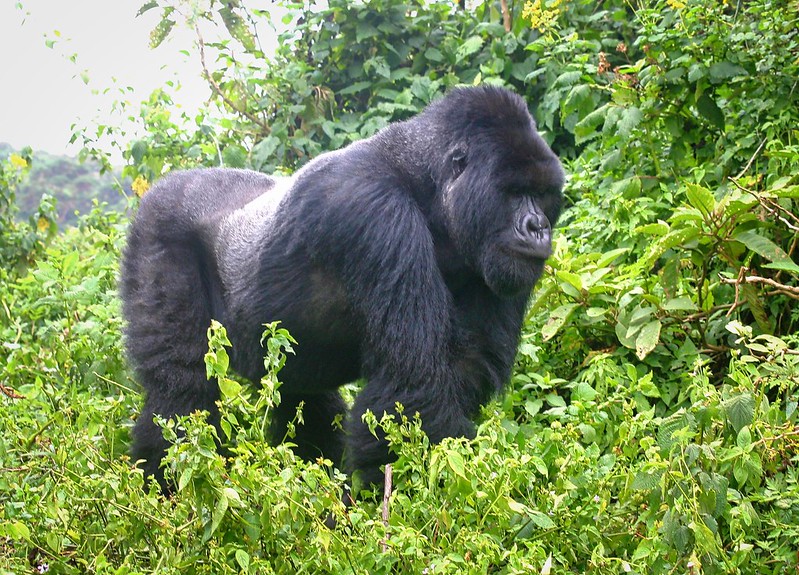
As their name confirms, mountain gorillas dwell in high altitude areas ranging from 2,300m to 4,500meters above sea level thus the journey requires you to traverse difficult terrain, such as muddy, steep slopes, and treacherous pathways, so as to connect with the mountain gorilla family that has been assigned to you. The elderly, seniors and disabled who are not in good physical condition, may not be able to go through these challenges.
Preparing a gorilla trekking safari for the elderly and people with disabilities.
Age or disability should not be a limitation to any one willing to participate in gorilla tracking as long as you are 15 years and above. It is not only for the young and energetic. If one can board a plane or easily driven to the tracking centre, they can participate in the activity. Most travelers who go gorilla tracking are between 40 to 60 years, but if your people like grandparents can get on plane, they can also enjoy this once in a lifetime experience, though some people can visit the gorillas twice or more times depending on their interest.
At the park centre, during briefing, park rangers and guides check through all trekkers identification documents to identify those who might need extra attention. Travelers aged 60 and above are allocated to gorilla families within easy reach, (trekking for 30 minutes to 2 hours). Trekkers above 60 years and feel physically fit for longer treks, they are free to request for them, this helps them to have more fun and discovery in the stunning African wilderness.
Hiking in the gorilla habitat does not only expose you to mountain gorillas but also other wildlife creatures including birds, other primates, insects, reptiles, and several plant species.
Allocation to different gorilla families also depends on the demand for gorilla permits. Many tourists find it difficult to secure an easier excursion when most of mountain gorilla permits are reserved. Travelers are advised to place for permit bookings at least three months before their travel dates. this will help them get allocated to families of their choice.
Travelers who opt for double gorilla trekking, they will be allocated to different gorilla families on those different days. A group of 8 trekkers is allowed to visit a particular gorilla family per day. This helps to prevent disease transfer and stress to the gorillas.
It is also important for travelers to inform their tour operators about their physical and fitness concerns before booking their safaris. This will help them make good preparations if there are needs of special arrangements with the park authorities. if you need special equipment like sedan chairs, porters or vans, such issues must be addressed in advance.
Elderly persons or others who are unable to walk long distances are lifted in sedan chairs which have handles, a steel base, and seat belts. Your tour operator will share the stand cost with you after adding the cost of the porters and the rented sedan chairs.
Alternatively, the elderly and disabled can be caried on a stretcher made from bamboo sticks. 12 porters are assigned to lift one trekker, 4 at a time as they will need to rest, to and from the gorilla family. the trekker is not supposed to touch the ground. Porters are well versed with the parks terrain and will successfully carry you to meet your gorilla family and back to the tracking centre. Stretchers and sedan chairs cost $300 to $500 depending on the weight of the client and length of the trek. This fee also includes a payment for the porters, but you can tip them when you return to appreciate their service.
For trekkers who are physically fit and can trek without being carried, they are advised to hire porters to help them carry their heavy back packs, cameras and recording devices. Hiring a porter cost $20 to $30 depending on the size of the pack/luggage. You can also give an extra tip to appreciate their service. This fee looks small but it’s a great contribution to the development of their daily lives as some of them are students who use it for school fees, and parents to cater for their families.
Among the mountain gorilla tracking destinations , it should be noted that Bwindi Impenetrable national park in Uganda is most favourable location for trekking for the eldery .This is because its terrain is less hilly and relatively flat (has lower altitude) compared to the other locations which are part of the Virunga massif which covers Mgahinga national park, Volcanoes national park and Virunga national park.
Besides the low altitude, Bwindi has four sectors at which tracking starts, these include, Buhoma, Rushaga, Ruhija and Nkuringo. Each sector has different gorilla families, and the park has over 20 families including 2 families set aside for the habituation experience. This offers a chance to visitors to select a tracking sector of their choice and if you book earlier, there higher chances of trekking to a family close to the starting point.
If you opt for volcanoes National Park, the gorillas tend to spend most of their time in the higher altitude levels, but the treks are always shorter as the trails are defined. Accessing the park is also easy as it takes 2.5 hours to drive from Kigali to Musanze at Kinigi park centre, compared to the 8 to 10 hours taken from Kampala to Bwindi.
As you plan your gorilla tracking trip, it’s always important to read about the tracking destinations, gorilla families or consult your tour operator to guide you on how to choose a tracking destination or a gorilla family for your adventure.
Other considerations while organizing an elderly person’s gorilla trekking trip.
It is important to note that gorilla tracking is safe as all trekkers are accompanied by armed park rangers and guides. For the last two decades, Uganda and Rwanda have not experienced any militia attacks, and for the case of DR Congo the security conditions are unpredictable due the previous instabilities. However, there are several check points along the road to the park center, and more rangers are provided to escort trekkers for their activity.
Travelers to the gorilla parks are amazed by the African scenery, valleys, savannah national parks, mountains, and the stunning beauty of the natural wilderness.
It is important that a gorilla tracking package comes with little stops so you can relax and find interesting, unique places, like the crossing of the equator in Uganda and the rolling hills in Rwanda.
Accommodation for the senior /elderly or disabled trekkers.
Most of the accommodations close to the gorilla tracking parks offer affordable and convenient stays for visitors of different budgets. These range from high-end, midrange and budget lodges, your choice is determined by your budget. All facilities are constructed to cater for also persons with disabilities.
Some of the friendly accommodations to the elderly and disabled:
In Bwindi: Mahogany springs Lodge, Buhoma lodge, Ichumbi Gorilla Lodge, Clouds Mountain Gorilla Lodge, Gorilla Heights Lodge, Trackers Safari lodge, Nkuringo Bwindi gorilla Lodge, Gorilla Forest Camp, Bwindi Lodge, Four Gorillas lodge, Gorilla Hills Eco Lodge and many others.
In Volcanoes: Wilderness Bisate lodge, Five Volcanoes Boutique hotel, Sabinyo Silverback Lodge, Mountain Gorilla View lodge, Sambora Kinigi Lodge, One and Only Gorilla’s Nest Lodge, Virunga lodge, Singita Kwitonda Lodge, The Bishop’s hose and many others.
Trekking essentials for the elderly:
- After securing an easier trek and a sedan chair or stretcher, the elderly should have the following in their pack.
- Clothing: Long sleeved shirt, light weight trousers (avoid jeans), waterproof jackets, woolen socks, and gaiters.
- Sturdy hiking boots: They should be well fitting, have ankle length and water resistant.
- Walking stick: These are provided at the park center or your accommodation.
- Personal first aid kit: it should contain plasters, wipes, muscle relief cream, medicines prescribed by the doctor like anti malarial and anti diarrhoeahs.
- Insect repellents: to protect you from insect bites
- Sunglasses and sunhat: to prevent from direct sunrays.
- Snacks and water: To keep you energized and hydrated throughout the trek.
- Camera and binoculars for photography.