
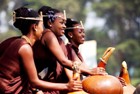
We spent an evening and two mornings at the cultural village. The visit normally follows a visit to the gorillas, but my visitors decided to stick to the cultural events. We were the only group during the 3 days.
Upon arrival, we were greeted by traditional song, dance and drumming. We then visited the King’s house and finished with some bonfire singing and dancing. The next morning, we walked in the hills around the village with our host, Didier, introducing the various flora and explaining the agricultural methods used in the area. This was followed by a consultation with the healer, trying out the drums and shooting traditional arrows. We then relaxed in the King’s house with some banana beer and Didier presenting traditional soap made from a local fruit. We also presented goats to villagers who belong to cultural village programme. The money received from the visits is distributed to members of the cultural village, who also perform during the visit.
The last morning we were given the tour of the actual village to see how the locals live today. One of the families showed us how they are building a new house with the support of the cultural village programme and thanked us profusely for helping them.
A great experience and all for a great cause as well. “What a Cultural Village Should Be. Great Fun!”
The Iby’wachu Cultural Village is nestled in the hills of Musanze, quite near Kinigi and the Mountain Gorillas. It is an easy side trip for anyone visiting the Gorillas and Golden Monkeys of Volcanoes National Park, but especially convenient for those staying at the Virunga Lodge.
The village costs $35.00 per person, or you can stay overnight there for $70.00 per person. Once inside, we were greeted by a traditional Rwandese song and dance by smiling dancers clearly having a blast themselves. We were escorted into the King’s hut (the King moved to the US after Rwandese independence, now living in Texas), dressed up like King and Queen, and shown some of the traditional customs. We were introduced to the King’s bedroom, the waiting room of his harem, the meeting room, and how the interaction between the King and the villagers went down.
Upon leaving the hut, we were greeted by the traditional “welcome King” song and dance which was very fun. We were invited to participate which of course we did, great fun! We visited the village Medicine Man, who showed us his secret “love potion” and “natural Viagra”, along with herbal Imodium. One of the elders showed us how to shoot a traditional bow and arrow, and we got to try it out. After I shot the “animal”, we did a celebration dance “Goma”.
We were introduced, of course, to the ladies with the handicrafts, which were much fewer, much better priced, and much less pressure than the Masai villages. We actually found the items later in town for more believe it or not! We were then treated to a real show of traditional dancing, drumming and songs, in full costume, and then we were invited to participate and learn the dances. We of course did, as everyone should, and even donned long blond wigs and tribal skirts in the process. It was great fun and sure made for some amusing vacation photos to show people back home!
Our guide was very funny throughout, and the villagers were always smiling and laughing, posing for pictures, and getting us involved. Our guide took photos of us while we were dancing, and we all had a great time laughing about it the rest of the day. Highly recommended – the Masai should take a lesson from this village! Unlike the Masai villages we visited, this village was very clean (like all of Rwanda) and they really were trying to make you have a good time, rather than just steer you to the high-pressure sales of trinkets. We were so happy our guide took us here, great fun – just make sure to loosen up and participate and everyone will have a much better time than if you are shy, including you.


